
It’s the question almost everyone asks themselves and almost nobody says out loud before stepping aboard: what if I get seasick? Let’s answer it plainly from the start: the vast majority of people don’t get seasick on a trip around the bay of Benalmádena, and anyone prone to it can prevent it with four simple habits. We’ve spent years heading out to sea with families, couples and groups aboard a classic sailboat, and seasickness rarely spoils the outing when you know how to stay ahead of it. In this guide, we tell you, without drama and without blowing smoke, why it happens, what to do before you board and what to expect depending on the plan you choose.

Why people get seasick on a boat (and why it’s easier to avoid than you think)
Seasickness (or motion sickness, if you want the technical name) is neither a weakness nor an illness. It’s simply a mismatch between what your eyes see and what your inner ear feels, the part of the body that governs balance. When the boat rocks gently, your ear notices that sway; but if at that moment you’re looking at your phone or the deck, your eyes tell your brain that everything is still. That small contradiction is what, in some people, ends up turning your stomach.
And here’s the good news: as soon as your eyes and your ears agree again (by looking at the horizon, for example), the feeling eases on its own. That’s why almost everything you’ll read below points in the same direction: helping your body understand that it’s moving. You don’t need to be a sailor; you just need to know where to position yourself.
Prevention before you board: the small moves that make the difference
A good part of the work is done on land, before we cast off. These are the tips we give to anyone who asks us nervously at the harbour, and which many passengers end up repeating as their own:
- Take the tablet half an hour before. If you know you get carsick or bus-sick, an over-the-counter antihistamine for motion sickness works far better taken about 30 minutes before setting off, not once you already feel unwell. It is, by far, the tip our own customers repeat the most. If you take other medication or have any doubts, mention it to your pharmacist first.
- Neither on an empty stomach nor after a feast. Come aboard with something light in your stomach (a slice of toast, some fruit, a few biscuits). A completely empty stomach causes as much sickness as overeating.
- Stay hydrated and go easy on the alcohol. A welcome toast awaits you on board (cava, sangria or soft drinks included), and of course you should enjoy it; but the midday sun and alcohol on an empty stomach don’t help your balance.
- Sleep well the night before. Tiredness and, above all, a hangover are seasickness’s best allies. Arriving well rested is already half the battle won.
- Choose your time wisely. The sea is usually flattest first thing in the morning; if seasickness really worries you, that slot works in your favour. We go into it in our guide on what time of day is best to head out.
And if you want the full list of what to pack (from footwear to a layer for the trip back), you’ll find it in our guide on what to bring on a boat trip.
On board: where to sit and where to look
Once you’re under way, the trick is twofold: sit where the boat moves least and look toward where the movement makes sense. This is usually enough:
- Look at the horizon, not at the screen. That distant line between sea and sky is your visual anchor: it confirms to your brain that you are indeed moving. Reading messages or looking at photos on your phone is exactly the opposite — the number-one trigger of seasickness.
- Position yourself toward the middle of the boat. The bow and stern pitch more; in the central area, the rocking is felt less. On a sailboat like ours, the central deck is also the best place to travel comfortably.
- Seek fresh air and face the wind. Air on your face and avoiding stuffy smells (engine, galley) feel surprisingly good. Shutting yourself away below deck is the worst thing you can do.
- Keep yourself entertained. Chat, look at the coast, raise a toast, take photos. A busy mind notices the swaying far less than one that’s on the lookout for “Am I going to get seasick?”.
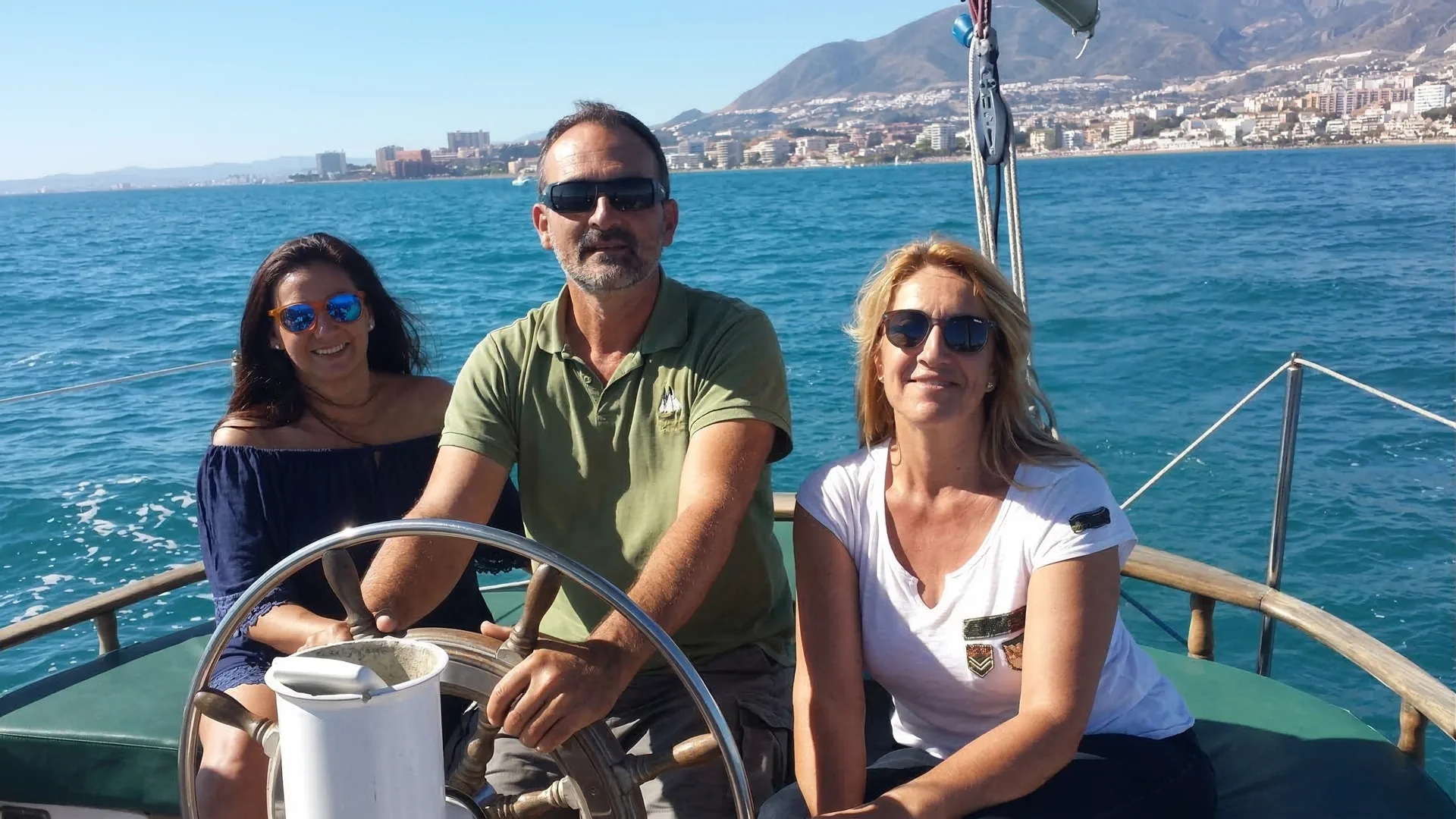
A note we like to add: our skipper, Juan Carlos, and the crew are more than used to someone setting off with doubts. If you feel the first symptoms, tell them without hesitation (you’re not the first and you won’t be the last). They know every inch of the bay and know how to smooth the moment out: finding more sheltered waters, easing the pace or, quite simply, keeping you distracted until it passes.
Calm bay or open sea: how much you’ll feel it depending on the plan
Here’s the honest part, the one others would rather not tell you: not every trip moves the same. And choosing yours well is probably the best prevention of all.
A gentle trip along the coast and bay of Benalmádena takes place in sheltered, almost always flat waters: it’s the option on which practically nobody gets seasick, ideal if you’re bringing children, if you have doubts or if it’s your first time on a boat. It lasts just 1 h, plenty of time to enjoy without anyone getting the chance to think about their stomach. The same goes for the dolphin watching trip, which runs along that same sheltered stretch of coast.
As we head further out, the rocking becomes more noticeable. A route toward Fuengirola spends more time away from the shelter of the harbour, and a sailing route out to the open sea is the liveliest of all (which is precisely why it’s the favourite of those looking for real sailing, sails unfurled and the boat heeling over). Our advice is simple: if seasickness worries you, start with the bay and leave the open sea for when the water no longer intimidates you. Changing the plan is far better than setting off afraid.

Children, pregnancy and sensitive stomachs
Children usually get less seasick than adults, and above all, they get distracted sooner: spotting dolphins, waving at other boats or “helping” the skipper keeps their attention off their stomach. Even so, apply the same tips for them as for yourself (a little food beforehand, eyes on the horizon, no screens) and choose a short, calm trip around the bay for the first few times.
If you’re pregnant, the recommendation is cautious and simple: check with your doctor first, don’t take seasickness medication on your own, and stick to short trips in calm waters. A gentle outing around the bay, without heading for the open sea, is usually perfectly enjoyable. And if someone in your group has an especially sensitive stomach, there’s no need for them to miss out: just let us know and we’ll choose the calmest outing together.

In the end, the formula is as unspectacular as it is effective: simple prevention, the right plan and a calm attitude. With that, seasickness stops being the star of the show and the sea goes back to being what you came for. If you’d like to start with the gentlest option, the trip around the bay is the best way in:
Price table
1 hRates
Departures
Add-ons
- Soft Drink Included · 1 per person per full hour
All prices include VAT.
Frequently asked questions
Is it normal to get seasick on a boat?
Yes, it’s completely normal and is nothing to be ashamed of: it’s a physical reaction of the inner ear, not a weakness. Most people don’t get seasick on a trip through calm waters, and anyone prone to it keeps it well under control with the prevention measures in this guide.
Which tablet should I take, and when?
Over-the-counter antihistamines for motion sickness are the usual choice, and they work best taken about 30 minutes before boarding, not once you already feel unwell. We don’t prescribe anything: if you take other medication or have any doubts, a quick word with your pharmacist is the best move.
Do people get seasick on a simple trip around the bay?
It’s very unlikely. The trip along the coast and bay of Benalmádena runs through sheltered, practically flat waters, so it’s the ideal option if seasickness worries you or you’re heading out with children.
What if I start feeling seasick once on board?
Tell the crew without any hesitation. In the meantime, fix your eyes on the horizon, seek fresh air and move toward the middle of the boat. On short outings, the feeling usually eases within a few minutes, and the skipper can look for more sheltered waters if needed.
Can children get seasick?
They can, although in general, they get seasick less and get distracted sooner than adults. A short, calm trip around the bay, a little food before boarding and keeping them entertained looking for dolphins is the recipe that works best.
With the right outing chosen, seasickness goes from being the great fear to a mere footnote. Start with a calm trip around the bay, apply the same four habits and just sit back and enjoy: the sea of Benalmádena has plenty to offer you, and you’ll almost certainly enjoy it from start to finish.